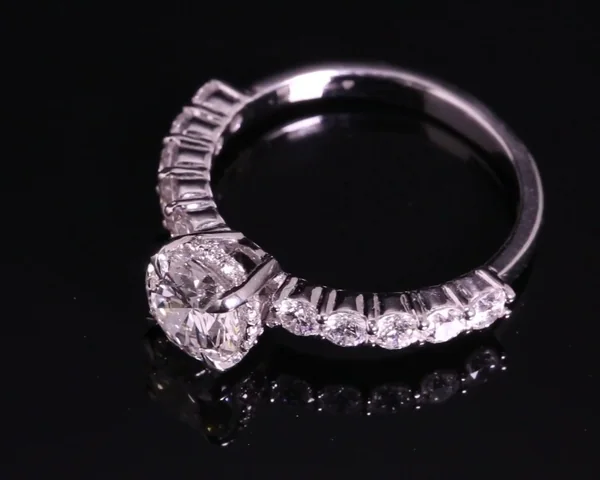
Selling a ring, privately
Sell your diamond engagement ring, privately
Know what it is worth first. A ring is two things: the center stone and the setting. Tell us about yours and an independent New York buyer can make a written offer. You never have to sell.
- The stone and the setting valued apart
- Any report, or none
- No obligation to sell
Two parts
How a ring is valued
The center stone on its own, then the setting and its metal.
GIA or IGI
The reports buyers ask for
A ring can still be looked at and valued without one.
Free to ask
No obligation to sell
An offer is a figure, not an obligation.
(718) 502-2820
One number to ask
Answered privately in New York City.
Part one
The center stone
The main stone is described by the four grading factors GIA set out in the 1950s, and by its report if it has one.
- Carat: weight, where one carat is 200 milligrams
- Color: graded on GIA’s D-to-Z scale
- Clarity: Flawless is the top grade
- Cut: how the stone was shaped and finished
- A report from GIA, IGI or another lab, if there is one
- Natural or laboratory-grown, said plainly
Part two
The setting and the metal
The band, the prongs and any small stones. A plain setting is often valued for its metal; a maker’s setting may count for more.
- The karat stamp inside the band, such as 14K or 18K
- 14K is 58.3% gold, 18K is 75% (karat divided by 24)
- Platinum or white, yellow or rose gold
- Side stones, a halo or a pave band
- A maker’s name, with its box and papers
Two parts, then the ring
What you are really selling
A buyer looks at a diamond ring the way a jeweler built it: one stone, then the metal that holds it. Then the kind of ring tells you which questions matter most.
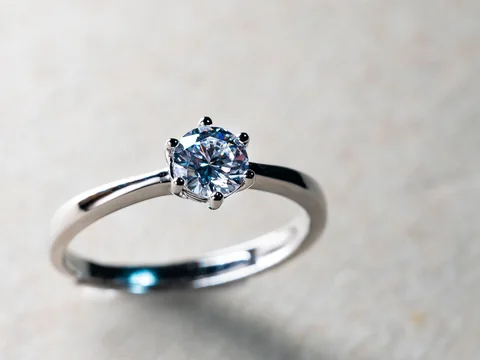
Solitaire rings
One stone on a plain band: the stone carries the value, so its report and grades come first.
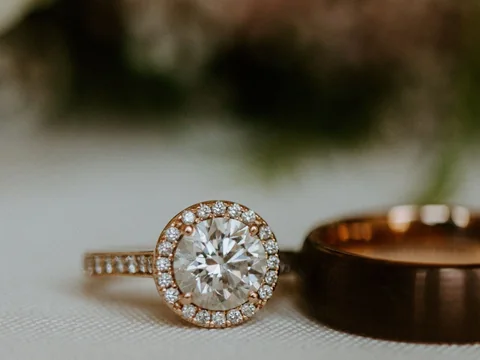
Halo and pave rings
Many small stones around the center. How a buyer counts them alongside the main stone.
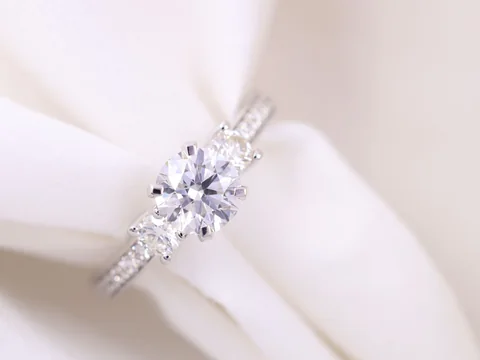
Three-stone rings
Three stones to describe. Where you take it decides whether each stone is looked at on its own.
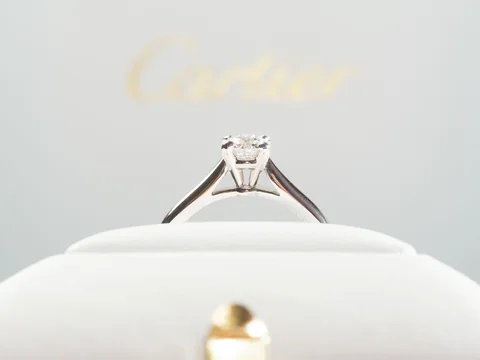
Designer rings
A maker’s ring with its box and papers can call for a different kind of buyer than a plain one.
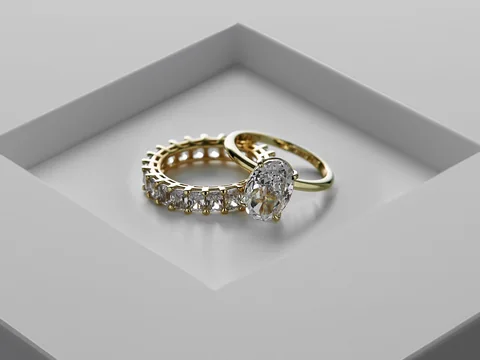
Rings with a GIA report
A report number a buyer can look up makes the first conversation shorter and clearer.
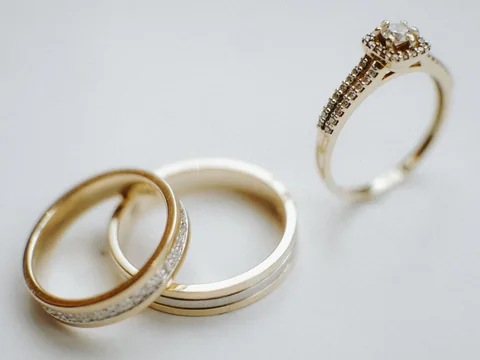
Wedding sets and bands
Plain bands are valued by metal and weight; diamond bands by their stones as well.


A quiet sale
Four steps, at your own pace
Nothing here is a commitment. You can stop after any step, and asking simply to know what the ring is worth is fine.

Ask privately
Call, or send the short form with what you know about the ring. If you know nothing about it, that is fine too.
The stone and the setting looked at
We connect you with an independent New York buyer, who will want to know about the stone, the report and the metal.
A written offer
Ask for any offer in writing, so you can read it calmly and compare it with another.
Take your time to decide
An offer is a figure, not an obligation. You can say no, wait, or ask somebody else.

A fair offer is still there tomorrow.
Gather what you have, ask for every offer in writing, and give yourself time.
How value is figured
How a diamond engagement ring is valued
If you want to sell a diamond engagement ring, it helps to see it the way a buyer will: as a center stone, a setting, and sometimes a name. The three are valued in different ways, and knowing which part carries the weight of your ring is the quickest way to understand any offer you receive.
The center stone
Diamond professionals describe a stone with the grading system GIA developed in the 1950s, built on four factors: clarity, color, cut and carat weight. Carat is weight, not size: under the FTC’s jewelry guides a carat is 200 milligrams and a point is one hundredth of a carat, so a stone described as 50 points is half a carat. Color is graded against master stones on GIA’s D-to-Z scale. Clarity runs down from Flawless, the top grade, which means no inclusions or blemishes a skilled grader can see under 10x magnification.
A grading report from GIA, or from IGI or another laboratory that issues diamond reports, puts those grades in writing. GIA offers a Report Check on its website where a report number can be looked up, which is why a buyer will often ask for the number first. A ring without a report can still be looked at and valued; it simply takes the buyer longer to be sure of what the stone is. If you want the detail, our page on how to sell a diamond ring walks through the stone, the small stones and the metal one by one.

The setting and the metal
The band and prongs are usually gold or platinum. Gold is marked by karat: 24 karat is pure gold, so the karat divided by 24 gives the gold share. 14K is 58.3% gold and 18K is 75%. Under the FTC’s guides, 14 karat gold should not be called solid gold, and gold-plated metal is not solid gold at all. Look inside the band for a stamp, and note it if it is worn.
When a setting is plain, a buyer often values it by its metal. The arithmetic is simple: melt value is the weight in troy ounces times the fineness times the spot price per troy ounce. A troy ounce is 31.10348 grams, heavier than a kitchen ounce, and a ring is often weighed in grams or pennyweight (1.555174 grams each). Melt value is the value of the pure metal only, and an offer for metal alone is usually below it, because the buyer pays to refine it and needs a margin.
The name
A ring from a known maker, with its box, receipt and papers, may interest a buyer who resells designer jewelry, and that can change which buyer is right for it. Our page on the best place to sell an engagement ring matches each kind of ring with the kind of buyer that suits it.
Said honestly
Why an offer is lower than the price you paid
This is the part most people find hardest, so it is worth saying plainly. A retail price includes the store’s costs and its margin. A buyer pays what the ring is worth to them to resell or to break down, so an offer will be lower than what was paid in a store. That is true of almost every ring, however much it was loved, and it says nothing about the ring or about you.

An insurance appraisal is not an offer either. It describes the ring, which is a different question from what a buyer would pay for it today. Jewelers Mutual, a jewelry insurer, suggests getting an appraisal before you sell and using it as a guideline, and that is sensible: it tells you what you own. It does not tell you the price.
What you can control is how clearly the ring is described and how carefully you compare. Gather what you have, ask for every offer in writing, and give yourself time. Our guide on how to sell an engagement ring sets out each step in order.
When the ring has a story
Selling after a breakup, a divorce or a loss
Most rings that are sold were not bought to be sold. They come out of a drawer after an engagement ended, after a divorce, after someone died, or when a couple wants something new. Each of these is a little different, and none of them needs to be explained to anyone.
- After a broken engagement. New York has a law, Civil Rights Law section 80-b, that lets a person go to court to recover property or money that was handed over solely in view of a planned marriage that did not take place. If there is any question about who owns the ring, ask a lawyer before you sell it.
- After a divorce. Who keeps a ring is a legal question, not one this site can answer. Once it is settled, the ring is valued like any other: stone, setting, name.
- An inherited ring. Older rings often have no report and sometimes a stamp worn thin. That is common, and a ring can be valued without either.
- Trading up. If you are replacing a ring, it can help to know what the old one is worth before you talk to the store about the new one.
Our page on the engagement ring after a divorce covers the questions people ask most, and points to where the answers really come from.
Comparing offers
How to sell an engagement ring without regret
The places that buy rings are not alike: a jeweler, a diamond buyer, a consignment shop, an auction, an online marketplace and a pawnshop each work differently, and pawning a ring is a loan, not a sale. If you are weighing them up, our page on where to sell a diamond engagement ring goes through each place in turn, and the guide to sell an engagement ring step by step covers the paperwork, the cleaning and the written offer.
Wherever you go, a few things mark a careful buyer. In New York City, a business that buys used jewelry needs a Secondhand Dealer license from the city’s Department of Consumer and Worker Protection (DCWP), and must post it where customers can see it. It must weigh precious metal on an approved scale and tell you the troy weight. It will ask for your photo ID and your signature, and it must keep a record of the sale. It cannot buy from a minor.
- Ask for the offer in writing, with the stone and the metal described.
- Ask whether the figure is for the whole ring or for the stone alone.
- Keep your report, and know its number before anyone looks at the ring.
- Take your time. A fair offer is still there tomorrow; pressure to decide now is a reason to wait.
Rings that need a different answer
Wedding bands, lab-grown stones and pawning
A plain wedding band has no stone to grade, so it is mostly a question of metal and weight. A diamond band or a matched wedding set is valued for its stones as well. If that is what you have, the page on how to sell a wedding ring explains both.

A lab-grown diamond is made in a laboratory rather than mined. Under the FTC’s jewelry guides it should be clearly described as laboratory-grown or with similar words, because it is not a mined diamond, and a buyer will want to know which kind you have. The guide to selling a lab-grown diamond ring is honest about what that means for resale.
If what you need is money for a while rather than a sale, a pawn loan is a different arrangement with its own rules: in New York City, lending money on pledged goods needs a separate DCWP Pawnbroker license. Our guide on whether to pawn or sell an engagement ring compares the two plainly.
What to gather
- The grading report, if the stone has one (GIA, IGI or another lab)
- The receipt or an appraisal, if you kept it
- The box and papers, for a designer ring
- A note of any work done: resizing, a new setting, a stone replaced
None of it is required. A ring can be looked at and valued without any of it.
Wherever you are
Answered in New York, open to sellers anywhere
The line is answered in New York City. Manhattan’s Diamond District, on West 47th Street, has the largest concentration of diamond and jewelry related companies and retailers, according to the 47th Street Business Improvement District.
Anywhere in the US
You can call or send the form from any state. Have what you know about the ring to hand: the stone, any report, the metal and any papers.
In New York City
Selling in the city, where buyers are licensed by the DCWP and many cluster in the Diamond District on West 47th Street, between Fifth and Sixth Avenues.
- Manhattan
- Brooklyn
- Queens
- The Bronx
- Staten Island
Questions
Questions people ask before selling a ring
Is this site a buyer?
No. Sell Diamond Engagement Ring is an independent referral service, not a buyer, pawnshop or dealer. When you call or send the form, we connect you with an independent buyer in New York, who makes any offer.
Do I have to sell if I ask?
No. Asking is free, and an offer is only a figure. You can decline it, wait, or compare it with others.
Can I sell a ring without a GIA report?
Yes. A report makes the stone quicker to confirm, but a ring can be looked at and valued without one.
How much can I expect to get for my engagement ring?
Nobody can say honestly without knowing the stone, the setting and any report. Expect an offer below the retail price paid, because a retail price includes the store’s costs and margin. The how much can I sell my engagement ring for guide explains what moves the figure.
What will a buyer ask me for?
In New York City, a licensed buyer asks for photo ID and your signature, and keeps a record of the sale. Have the report number, the receipt and any papers ready if you have them.
Is the ring mine to sell after a broken engagement?
That is a legal question. New York’s Civil Rights Law section 80-b lets a person go to court to recover property or money that was handed over solely in view of a planned marriage that did not take place, so if ownership is in question, ask a lawyer first.
Are lab-grown diamonds bought the same way?
Under the FTC’s jewelry guides they should be clearly described as laboratory-grown, because they are not mined diamonds. Say which yours is if you know, and ask a buyer first whether they take lab-grown stones.
Do I pay tax when I sell a ring?
It depends on your sale. The IRS says net capital gains from selling collectibles, such as coins or art, are taxed at a maximum federal rate of 28% (IRS Topic 409). Ask a tax professional about your own situation.
Ready to ask what your ring is worth? Ask privately.
One call or the short form. An independent New York buyer can make a written offer, and you never have to sell.